Nitrification is the conversion of ammonium ions (NH4+) into nitrate ions (NO3−) by nitrifying bacteria. It happens in two steps, each carried out by a different group of bacteria:NH4+ → NO2− → NO3− 1. Ammonium ions are oxidised to nitrite ions (NO2−), for example by Nitrosomonas.
2. Nitrite ions are oxidised to nitrate ions, for example by Nitrobacter.Both steps are oxidation reactions that release energy. Nitrifying bacteria are chemoautotrophs: they use this energy, rather than light, to make their own organic compounds from carbon dioxide.Nitrification needs oxygen, so it happens in well-aerated soils. Nitrate matters because it is the main form in which plants absorb nitrogen. They take it up into root hair cells by active transport and use it to make amino acids and nucleotides.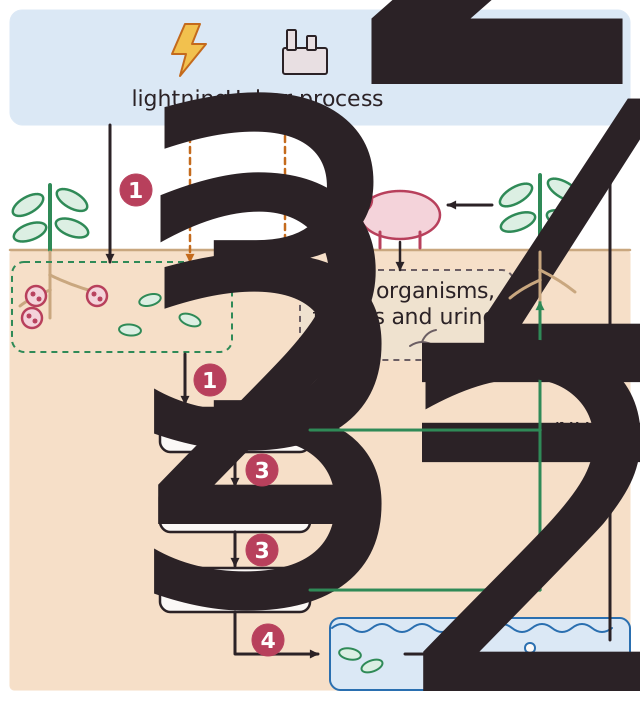 Example: A farmer ploughs a field and drains a waterlogged corner. Air enters the soil spaces, nitrifying bacteria get the oxygen they need, and nitrate levels rise. At the same time, anaerobic denitrifying bacteria become less active, so less nitrate is lost.Nitrate ions are very soluble, so heavy rain can easily leach (wash) them out of the soil into rivers and lakes.
2. Nitrite ions are oxidised to nitrate ions, for example by Nitrobacter.Both steps are oxidation reactions that release energy. Nitrifying bacteria are chemoautotrophs: they use this energy, rather than light, to make their own organic compounds from carbon dioxide.Nitrification needs oxygen, so it happens in well-aerated soils. Nitrate matters because it is the main form in which plants absorb nitrogen. They take it up into root hair cells by active transport and use it to make amino acids and nucleotides.
Example: A farmer ploughs a field and drains a waterlogged corner. Air enters the soil spaces, nitrifying bacteria get the oxygen they need, and nitrate levels rise. At the same time, anaerobic denitrifying bacteria become less active, so less nitrate is lost.Nitrate ions are very soluble, so heavy rain can easily leach (wash) them out of the soil into rivers and lakes.