Mycorrhizae are associations between certain fungi and the roots of plants. Most land plants form them, including many crop plants and trees.The fungus grows long, thin threads called hyphae. These spread through the soil and are connected to the root, acting as an extension of the plant's root system. Because the hyphae are very thin and numerous, they greatly increase the surface area for absorption.This helps the plant in two main ways:
• it increases the uptake of mineral ions, especially ions such as phosphate that move only slowly through soil;
• it increases the uptake of water, and the hyphae hold water around the roots, so the plant is more resistant to drought.The relationship is mutualistic: both partners benefit. The plant receives water and inorganic ions from the fungus. In return, the fungus receives organic compounds, such as sugars (carbohydrates) and amino acids, which the plant makes by photosynthesis.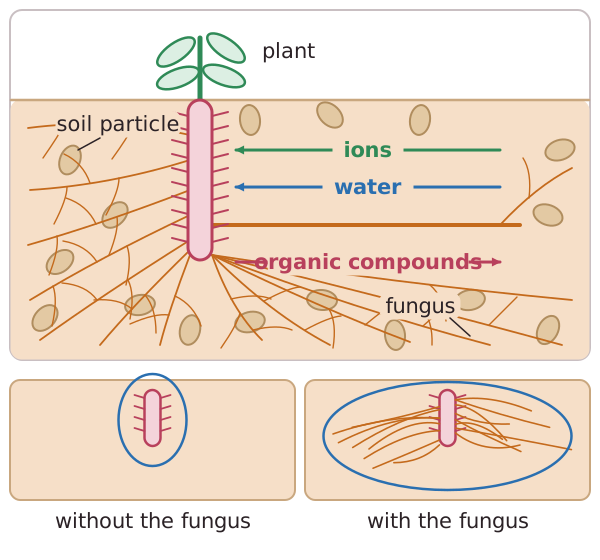 Mycorrhizae are therefore an important part of nutrient cycles, particularly the phosphorus and nitrogen cycles, because they help move inorganic ions from the soil into producers. Plants grown in soil without their mycorrhizal fungi often grow more slowly and show signs of mineral deficiency, even when the ions are present in the soil.
• it increases the uptake of mineral ions, especially ions such as phosphate that move only slowly through soil;
• it increases the uptake of water, and the hyphae hold water around the roots, so the plant is more resistant to drought.The relationship is mutualistic: both partners benefit. The plant receives water and inorganic ions from the fungus. In return, the fungus receives organic compounds, such as sugars (carbohydrates) and amino acids, which the plant makes by photosynthesis.
Mycorrhizae are therefore an important part of nutrient cycles, particularly the phosphorus and nitrogen cycles, because they help move inorganic ions from the soil into producers. Plants grown in soil without their mycorrhizal fungi often grow more slowly and show signs of mineral deficiency, even when the ions are present in the soil.