 BRAINCAKE
Post-translational Control
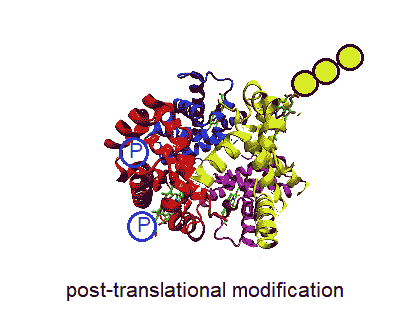
Post-translational control regulates the activity of a protein after it has been made on the ribosome. The polypeptide produced by translation often has to be modified before it becomes functional, which gives the cell another point at which gene expression can be controlled.
Many modifications take place in the Golgi apparatus. Non-protein groups can be added, such as carbohydrate chains to form glycoproteins, lipids to form lipoproteins, or phosphate groups. Amino acids can be modified, the chain is folded, and disulfide bridges can form to hold the protein in its tertiary or quaternary structure.
Sign in free to see the rest of this lesson, the R.E.C.I.P.E. recall steps and the quiz
BrainCake is free. Make an account in seconds and pick up where this page stops.
More in Genetics and Variation
- Lac Operon
- Cyclic AMP
- Post-transcriptional control
- Translational Control
- Homeobox Genes
- Body Plans
- Apoptosis
- Regulatory Genes
All 36 lessons in Genetics and Variation · All AQA A-level Biology topics