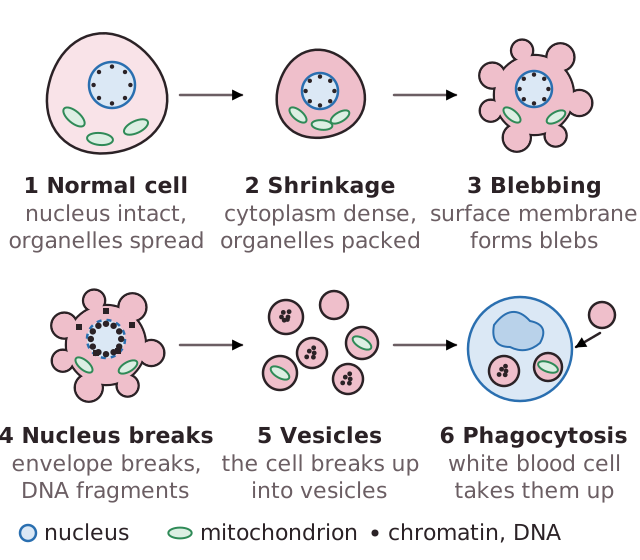
Apoptosis is programmed cell death which removes unwanted cells from the body. The cells undergoing apoptosis release cytokines which initiate mitosis and cell proliferation (increase in the number of cells) to cause tissue remodelling.Enzymes break down the cytoskeleton and the cytoplasm becomes dense and organelles become tightly packed together. The cell surface membrane changes forming blebs. Chromatin condenses on the edge of the nucleus and the nuclear envelope breaks. DNA breaks into fragments. The cell breaks into vesicles which are taken up by white blood cells by phagocytosis. The whole process occurs very quickly, with the cellular debris being taken up quickly and parts recycled without any damage to other cells.