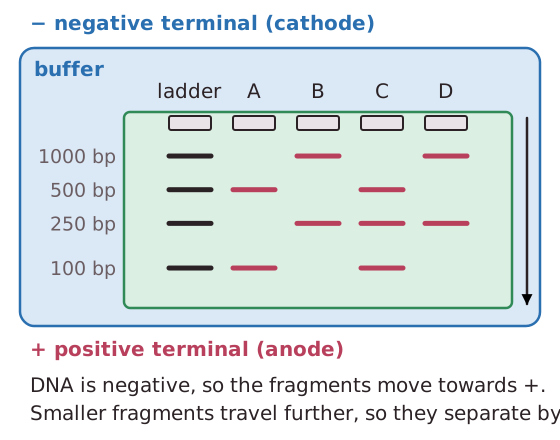
Gel electrophoresis is used to separate DNA fragments. DNA samples are placed in small wells made in agarose gel placed in an electrophoresis tray in buffer solution. DNA fragments of known length are placed in some wells as reference. An electric current is passed through the gel. DNA is negatively charged because of the phosphate groups, so the DNA fragments move towards the positive terminal (anode).Smaller fragments travel through the gel faster so the fragments are separated by size. The current is switched off, then the strands are separated by placing the gel in alkaline buffer and transferred to a nylon or nitrocellulose membrane by Southern Blotting. This involves placing the membrane over the gel and drawing the solution up through absorbent paper.