 BRAINCAKE
Non-cyclic Photophosphorylation
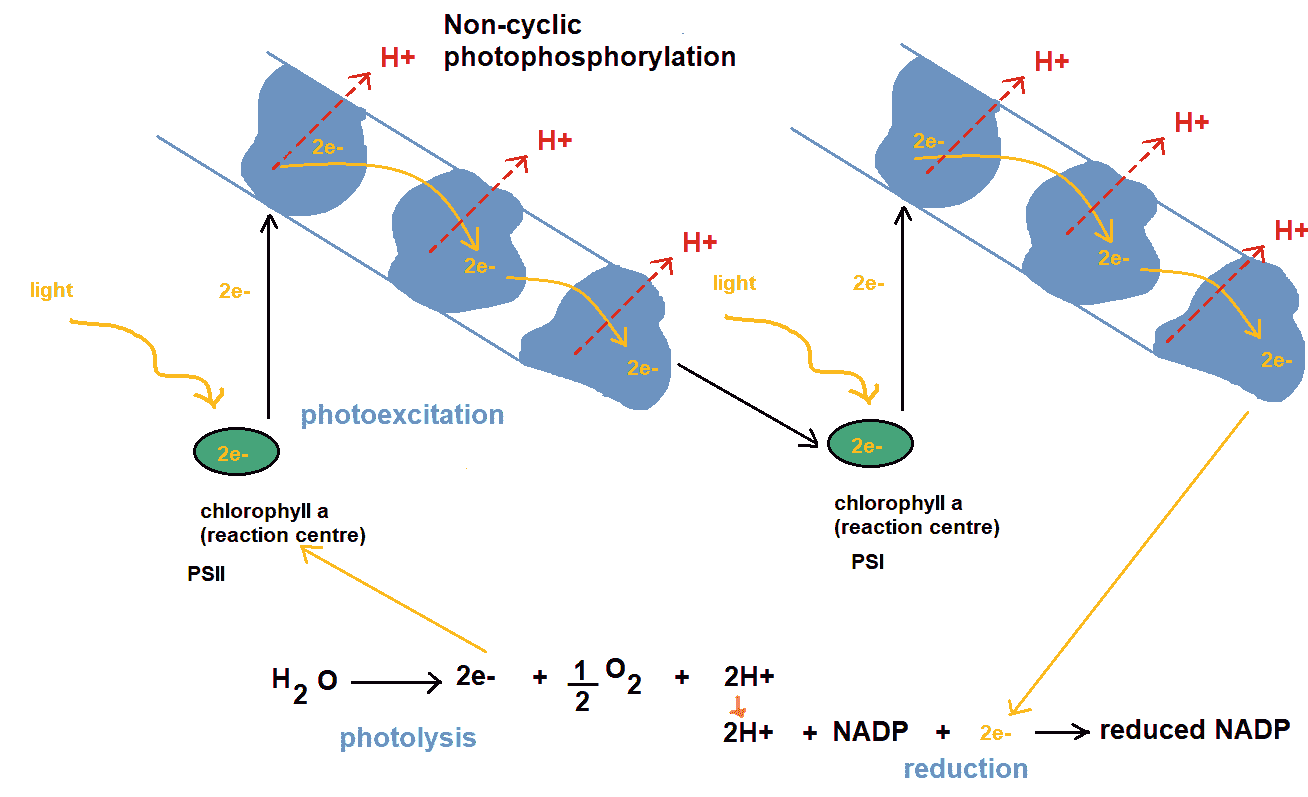
Non-cyclic photophosphorylation involves both PSI and PSII. The chlorophyll molecules at the reaction centres absorb light. Electrons are passed to electron carriers. A proton gradient is set up between the stroma and the inside of the thylakoid by actively transporting hydrogen ions into the thylakoid space using the energy from the electrons. The proton gradient is used to synthesise ATP by chemiosmosis.
Sign in free to see the rest of this lesson, the R.E.C.I.P.E. recall steps and the quiz
BrainCake is free. Make an account in seconds and pick up where this page stops.
Key terms in this lesson
- ATP
- Adenosine triphosphate, the universal energy currency of cells, formed by adding an inorganic phosphate to ADP and hydrolysed to release energy for cellular reactions.
- chemiosmosis
- The synthesis of ATP by ATP synthase, driven by the flow of protons down their concentration gradient across a membrane.
More in Energy for Biological Processes
- ATP
- Chloroplasts
- Photosynthetic pigments
- Photosystems
- Cyclic Photophosphorylation
- Chemiosmosis
- Calvin Cycle
All 8 lessons in Energy for Biological Processes · All AQA A-level Biology topics