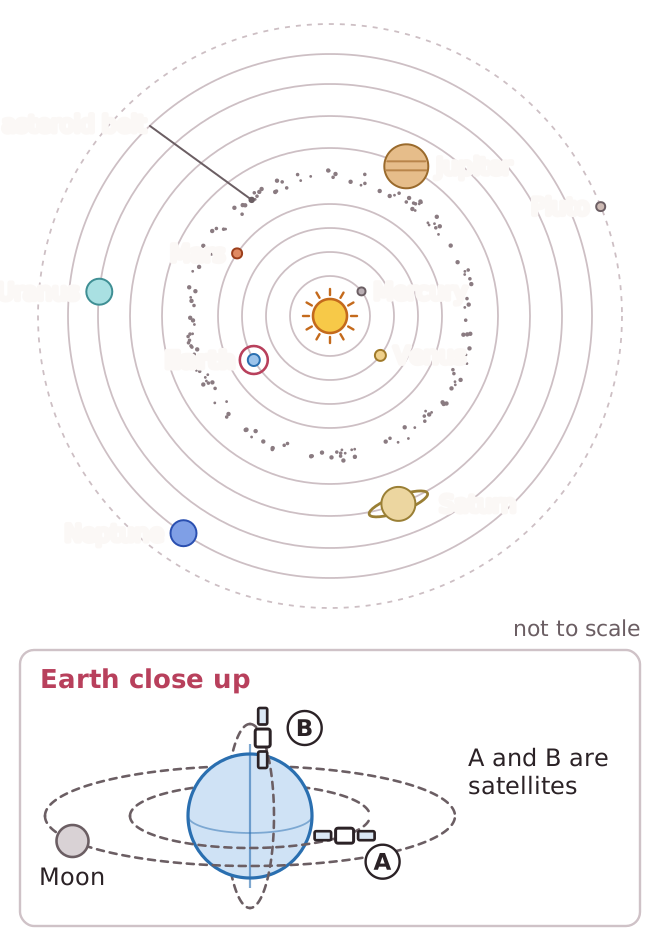
The Solar System has the Sun, which is a star, at its centre. Eight planets orbit the Sun. In order from the Sun they are Mercury, Venus, Earth, Mars, Jupiter, Saturn, Uranus and Neptune. The four inner planets are small and rocky. The four outer planets are much larger and made mostly of gas and liquid. A planet further from the Sun takes longer to complete one orbit. Smaller bodies also orbit the Sun, such as dwarf planets like Pluto and the asteroids in the belt between Mars and Jupiter.
Moons are natural satellites. They orbit planets and are held in orbit by gravity. Earth has one Moon, some planets have many, and Mercury and Venus have none. Artificial satellites are made by people and launched to orbit Earth. Like a moon, an artificial satellite stays in orbit because of gravity. The difference is that it is built by people for a purpose.
There are two orbits to know. A geostationary satellite orbits above the equator and takes 24 hours to go round, the same time as one rotation of the Earth, so it stays above the same point. It is used for communications and television. A polar satellite orbits low over the North and South poles and takes far less than 24 hours. As the Earth turns beneath it, it passes over the whole of the Earth's surface, so it is used for mapping and monitoring the weather.