All bodies absorb radiation from their surroundings and emit radiation of their own. The temperature of a body depends on the balance between the radiation it absorbs and the radiation it emits. If a body absorbs more than it emits, its temperature rises. If it emits more than it absorbs, its temperature falls. When the two are equal, the temperature stays constant. A hotter body emits more radiation, so a warming body emits more and more until a balance is reached.
Everyday examples show this. A hot cup of tea in a cool room emits more radiation than it absorbs, so it cools until it matches the room. A dark car left in sunshine absorbs a lot of radiation and gets hot, while a light, shiny car reflects more of it and stays cooler.
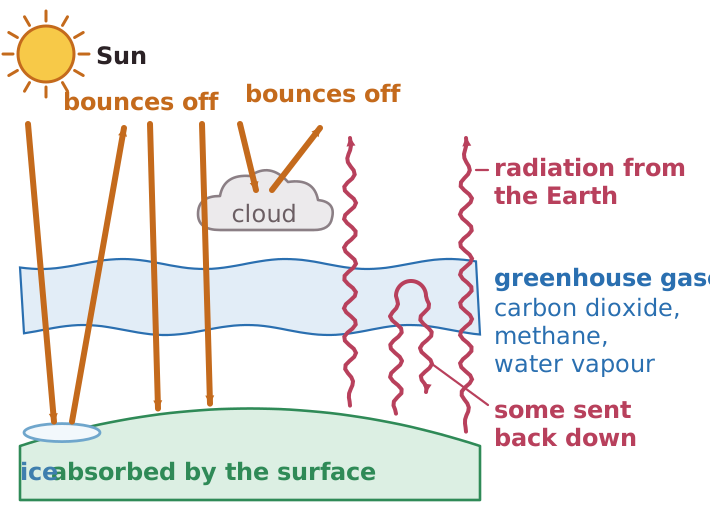
The same idea sets the temperature of the Earth. Most of the Sun's visible light passes through the atmosphere and is absorbed by the surface, which warms up. The Earth then emits infrared radiation. Ice and clouds reflect some of the Sun's radiation back into space, so less is absorbed and the temperature is lower. Greenhouse gases such as carbon dioxide, methane and water vapour absorb infrared radiation from the surface and send some of it back down, so less escapes to space. If the amount of greenhouse gas increases, the temperature has to rise until the Earth emits as much radiation as it absorbs again.