The frequency of a wave is the number of waves that pass a point each second. It is measured in hertz (Hz). A frequency of 5 Hz means 5 waves pass each second. To find a frequency, count the waves and divide by the time. For example, 12 waves in 3 seconds is 4 Hz.
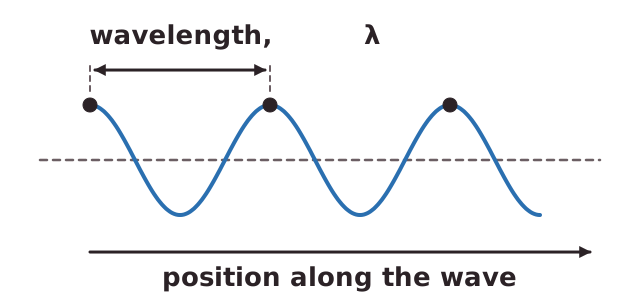
The wavelength is the distance from a point on one wave to the same point on the next wave, for example from one crest to the next crest. It is measured in metres (m), and the Greek letter lambda (λ) is the symbol used for it.
The two are linked. If the wave speed stays the same, a higher frequency gives a shorter wavelength, and a lower frequency gives a longer wavelength.