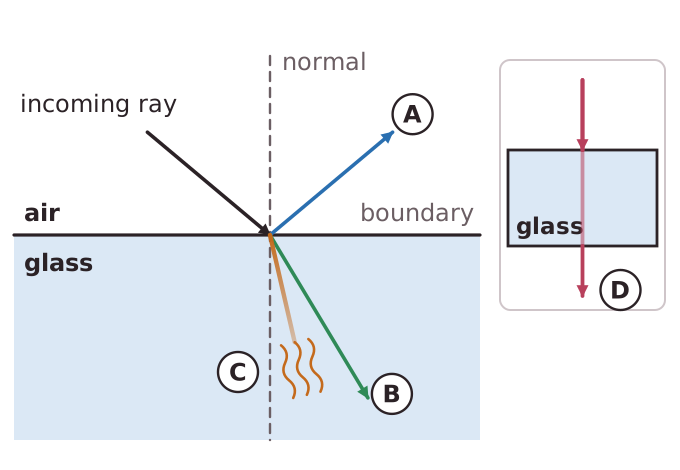
When a wave reaches the boundary between two materials, called an interface, four things can happen. Often more than one happens at once, and which one is strongest depends on the materials and on the wavelength of the wave.
In reflection the wave bounces back off the surface into the first material. The angle of reflection equals the angle of incidence, and the speed, frequency and wavelength stay the same. Echoes and mirrors both rely on reflection. In absorption the wave transfers its energy to the material, which usually heats up, so less of the wave carries on. Dark surfaces absorb a lot of light.
In transmission the wave passes into the second material and carries on through it, as light does through clear glass. A transmitted wave is often refracted. Refraction is a change of direction caused by a change of speed. If a wave slows down as it enters the new material it bends towards the normal, and if it speeds up it bends away from the normal. The frequency does not change, because it is set by the source, so the wavelength changes with the speed.
A wave that arrives along the normal is not turned, but it still changes speed. Different materials treat waves differently: lead absorbs X-rays strongly, while glass transmits visible light. A wave is reflected, absorbed or transmitted in proportions that depend on the material.