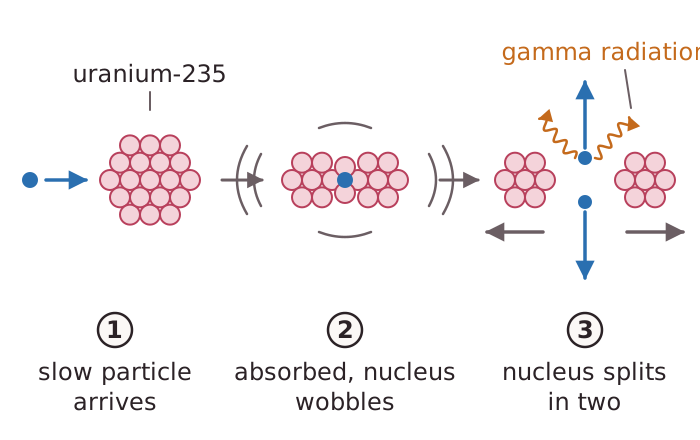
Uranium-235 is the fuel used in most nuclear reactors. Its nucleus is large and unstable. When a slow-moving neutron is absorbed by a uranium-235 nucleus, the nucleus becomes even more unstable and splits. This is nuclear fission.
The nucleus splits into two smaller nuclei, called daughter nuclei. Two or three neutrons are also released, and these neutrons move away at high speed. The daughter nuclei and the neutrons carry away the energy released, as kinetic energy. When the daughter nuclei collide with surrounding atoms, this kinetic energy is shared out and the material gets hot. Gamma radiation is also emitted.
The total mass of the products is very slightly less than the mass of the original nucleus and neutron. This small loss of mass is turned into a large release of energy. The released neutrons can go on to be absorbed by other uranium-235 nuclei, which is what makes a chain reaction possible.