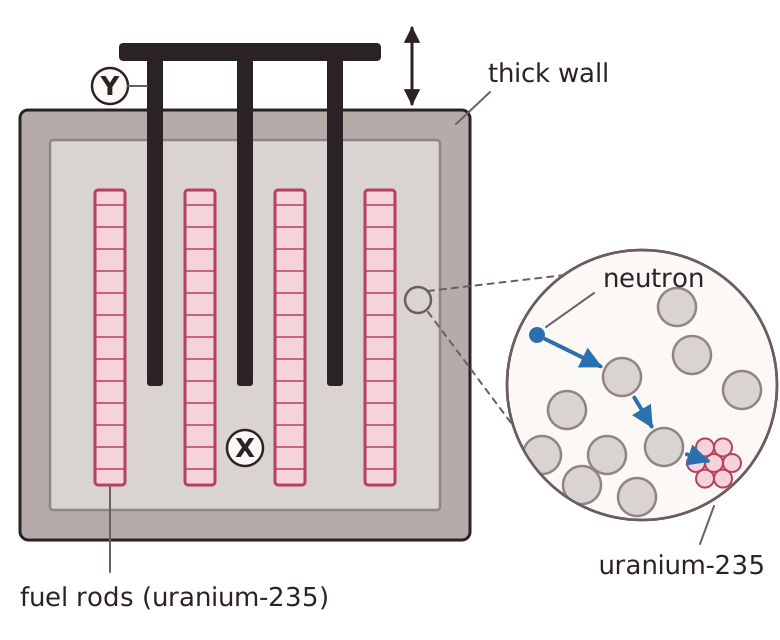
Inside a reactor, fuel rods containing uranium-235 are surrounded by a material that slows neutrons down and are interspersed with rods that absorb neutrons. Together these keep the chain reaction steady.
Neutrons released in fission move very fast, but uranium-235 is much more likely to absorb a slow neutron. A moderator is a material, such as graphite or water, that slows neutrons down. Fast neutrons collide with the atoms in the moderator and lose kinetic energy, until they are slow enough to cause further fission.
Control rods are made of a material, such as boron or cadmium, that absorbs neutrons. Lowering the rods further into the reactor means more neutrons are absorbed, so fewer cause fission and the reaction slows down. Raising the rods absorbs fewer neutrons, so the reaction speeds up. Lowering the rods fully shuts the reactor down, which is an emergency safety measure.