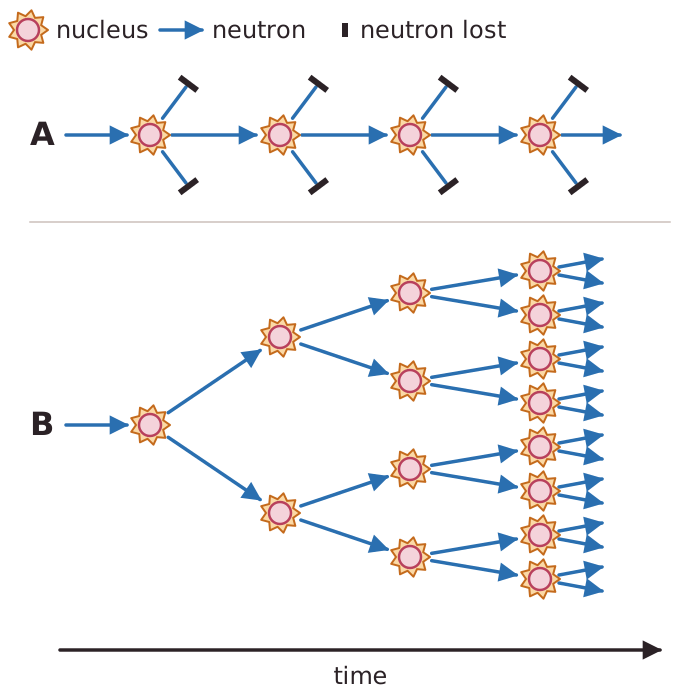
Each fission of uranium-235 releases two or three neutrons. If at least one of these neutrons is absorbed by another uranium-235 nucleus, that nucleus will also split and release more neutrons. This repeating process is a chain reaction.
In an uncontrolled chain reaction, on average more than one neutron from each fission goes on to cause another fission. The number of fissions grows rapidly, so the rate of energy release shoots up in a tiny fraction of a second. This is what happens in a nuclear bomb.
In a controlled chain reaction, exactly one neutron from each fission on average goes on to cause another fission. The number of fissions per second stays constant, so energy is released at a steady rate. That is what a nuclear power station needs. If fewer than one neutron per fission causes another fission, the reaction dies away.