Radioactive substances can help doctors see how the body is working without cutting it open. A tracer is a radioactive substance that is injected or swallowed and then followed as it moves around the body. A detector outside the body picks up the radiation and a computer turns the signals into an image. Tracers must emit gamma rays, because alpha and beta radiation would be absorbed in the body and never reach the detector. They must also have a short half-life, so that the activity soon dies away and the patient receives only a small dose.
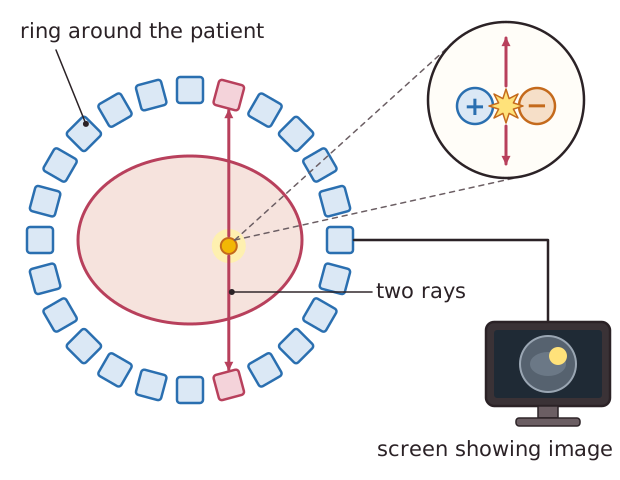
A PET scanner uses a tracer that emits positrons. The tracer is attached to glucose, which active cells take up. A positron is the antiparticle of an electron. When a positron meets an electron both are destroyed in annihilation and two gamma rays leave in opposite directions. A ring of detectors around the patient records these gamma rays and the computer works out where they came from.
Cancer cells use a lot of glucose, so a tumour shows up as a region of high activity. Fluorine-18 is a common PET tracer. Its half-life is about 110 minutes, so after 220 minutes the activity has fallen to one quarter of its starting value. Each further half-life halves the activity again, so after three half-lives one eighth is left.