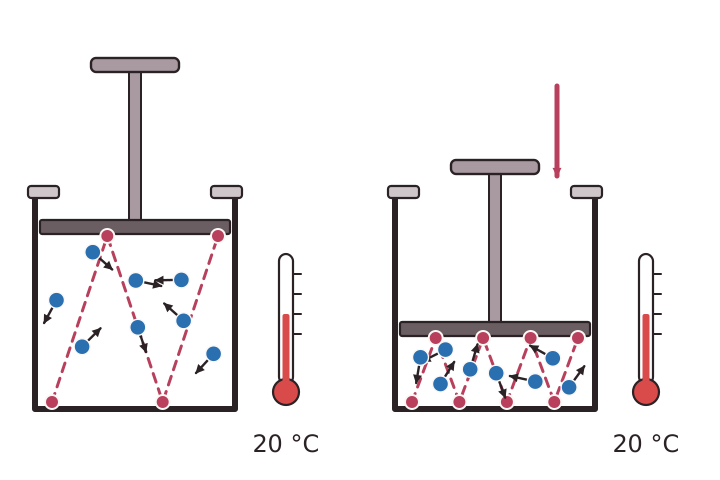
Take a fixed mass of gas in a sealed container at constant temperature. The number of particles is fixed, and because the temperature is constant their average speed does not change either.
If the volume is made smaller, the particles are squeezed into a smaller space. Each particle has less distance to travel between the walls, so it hits the walls more often. Collisions become more frequent, so the rate of collisions with the walls increases. More collisions every second means a bigger total force on each square metre of wall, so the pressure increases. Each collision is no harder than before, because the speed has not changed.
If the volume is made larger, the particles are more spread out. They collide with the walls less often, so the pressure falls.
So for a fixed mass of gas at constant temperature, pressure and volume change in opposite ways. When the volume halves, the pressure doubles.