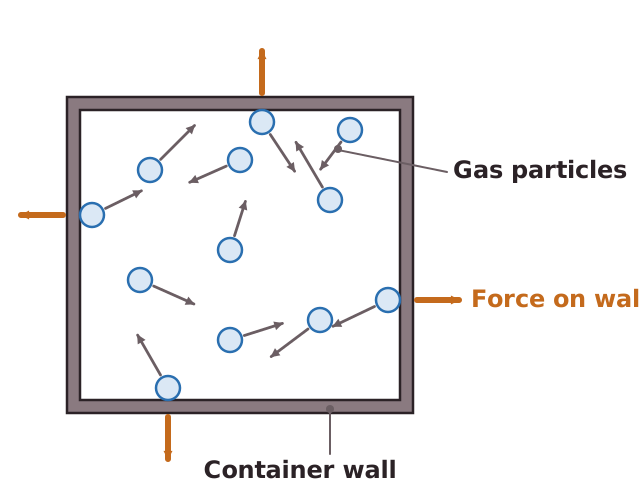
The particles in a gas are far apart and move randomly in all directions at high speed. They keep colliding with the walls of their container and bouncing off.
Each collision exerts a tiny force on the wall. There are huge numbers of collisions every second, so together they produce a steady force on the wall. Gas pressure is this force on each unit of area of the wall.
The pressure is larger if the collisions are more frequent or harder. If more particles are put into the same container, there are more collisions with the walls each second, so the pressure increases. Faster particles hit the walls more often and with a greater force, so the pressure is higher.