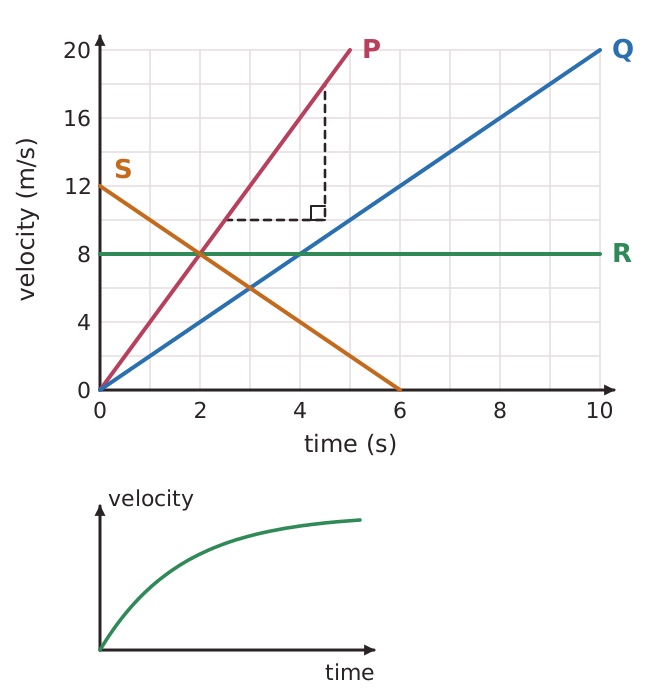
A velocity/time graph shows how the velocity of an object changes with time. The gradient of the line is the acceleration: acceleration = change in velocity ÷ change in time.
- A straight line sloping upwards means constant (uniform) acceleration.
- A horizontal line means the velocity is constant, so the acceleration is zero.
- A line sloping downwards means the object is decelerating.
- A steeper line means a greater acceleration, so two lines on one graph can be compared by looking at which is steeper.
To calculate the acceleration for a straight line, pick two points, find the change in velocity and the change in time, then divide. A line that rises from 0 m/s to 12 m/s in 4 s has a gradient of 12 ÷ 4 = 3 m/s2. This method only works when the acceleration is uniform. If the line is curved, the acceleration is changing.