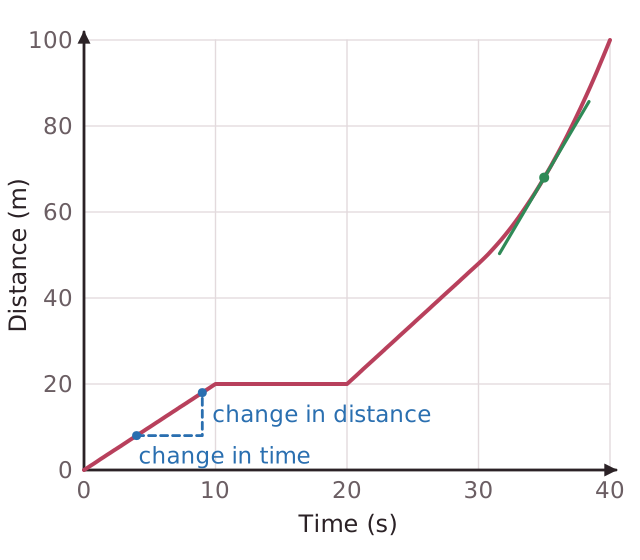
A distance/time graph shows how far an object is from its starting point as time passes. Time is on the horizontal axis and distance is on the vertical axis. The gradient of the line is the speed of the object: speed = change in distance ÷ change in time.
- A straight sloping line means constant speed. The steeper the line, the faster the object is moving.
- A horizontal line means the distance is not changing, so the object is stationary and its speed is zero.
- A curved line means the speed is changing. If the line gets steeper the object is accelerating, and if it flattens the object is slowing down.
To find a speed from a straight line, pick two points, work out the change in distance and the change in time, then divide. A line that rises from 0 m to 60 m in 20 s has a gradient of 60 ÷ 20 = 3 m/s. On a curve, draw a tangent to the line at the point you want and find the gradient of the tangent. This gives the speed at that moment.