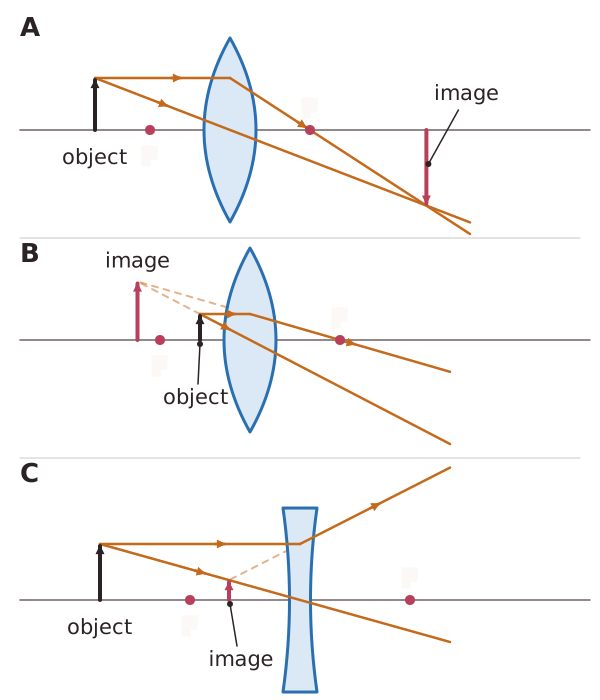
A real image forms where light rays actually meet. It can be projected onto a screen. A virtual image is where rays only appear to come from. Rays do not meet there, so it cannot be projected onto a screen. You see it by looking through the lens.
A converging lens can form either kind. When the object is further from the lens than the principal focus, the rays are brought together and the image is real and inverted (upside down). When the object is closer to the lens than the focal length, the rays are not bent enough to meet. They spread out, and the image is virtual, upright and magnified. This is how a magnifying glass works.
A diverging lens always spreads the rays out. It forms a virtual image that is upright and smaller than the object, on the same side of the lens as the object, whatever the distance.