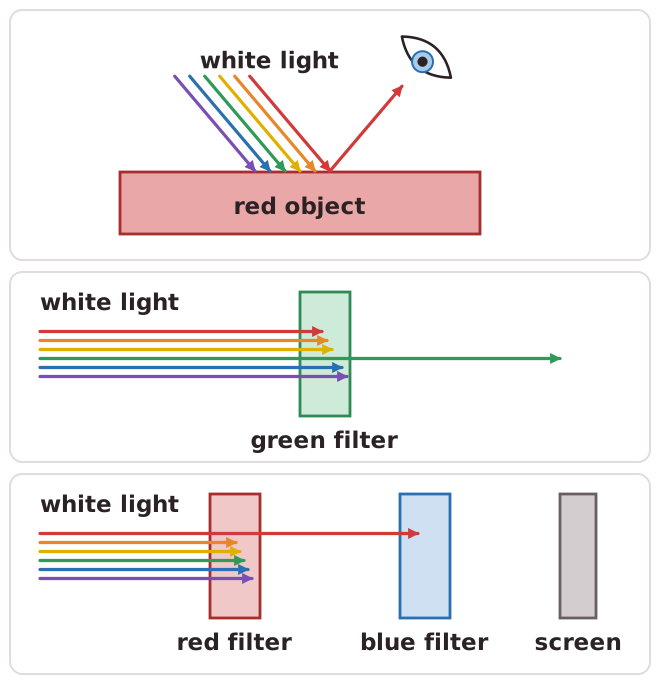
White light is a mixture of all the colours of the visible spectrum. The colour of an object depends on what happens to each colour when it reaches the object. This is differential absorption: some wavelengths are absorbed and others are reflected, and we see the colours that are reflected.
A red object looks red because it reflects red light and absorbs the other colours. A white surface reflects all the colours equally, and a black surface absorbs all the colours. If you shine light that contains no red onto a red object, there is nothing for it to reflect. In green light a red shirt looks black.
A coloured filter works by transmission. A green filter transmits green light and absorbs the other colours of white light, so white light passing through it emerges green. Two filters of different colours in a row can block almost everything. A red filter transmits only red, and a blue filter placed after it absorbs that red, so no light emerges and the screen looks black.