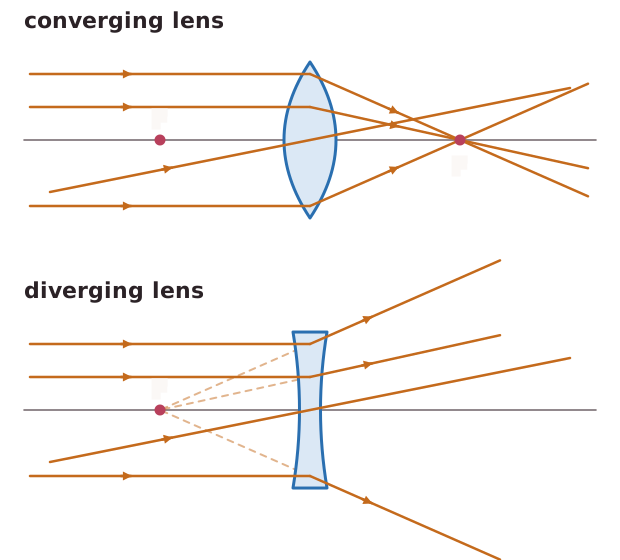
Both types of lens work by refraction. Light slows down when it enters the glass and speeds up when it leaves, so it changes direction at each surface. Both have a principal axis and a principal focus, and in both a ray passing through the centre of a thin lens goes straight through without changing direction.
A converging lens is thicker in the middle than at the edges. It bends rays towards the principal axis, so parallel rays converge and meet at the principal focus on the far side of the lens. This focus is real because the rays actually pass through it.
A diverging lens is thinner in the middle. It bends rays away from the axis, so parallel rays diverge and spread out after the lens. They never meet. If you trace the refracted rays backwards with dashed lines, they appear to come from a point on the same side as the incoming rays. This is the principal focus of a diverging lens and it is virtual.