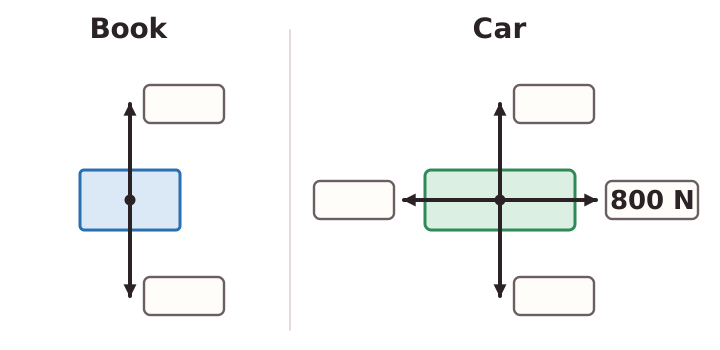
A free body force diagram shows all the forces acting on one object and nothing else. The object is drawn on its own, often as a simple box or a dot, with the rest of its surroundings left out. Each force is drawn as an arrow with its tail on the object. The arrow points in the direction of the force, its length shows the size of the force, and it is labelled, for example weight or friction.
Only forces that act on the object are included. The forces the object exerts on other things are left out. Common forces are weight (down), the normal contact force (at right angles to a surface), friction, air resistance or drag, thrust or driving force, and tension.
The diagram lets you find the resultant force. A book at rest on a table has weight acting down and the normal contact force acting up. The two arrows are the same length, so the forces are balanced. A car travelling at constant speed has a driving force of 800 N forwards and a drag force of 800 N backwards. The arrows are equal and opposite, so they cancel.