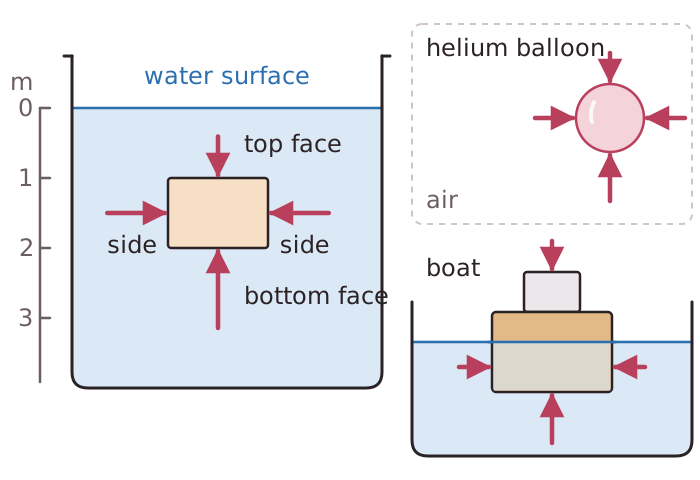
A fluid is a liquid or a gas. An object placed in a fluid feels an upwards force called upthrust. It is the reason a swimmer feels lighter in water and a helium balloon rises in air.
Upthrust comes from the way pressure changes with depth. Pressure in a fluid increases with depth, so the pressure on the bottom of an immersed object is greater than the pressure on its top. The force on the bottom, pushing up, is therefore larger than the force on the top, pushing down. The difference is a resultant force acting upwards, and that is the upthrust. The forces on the sides, at the same depths, are equal and opposite so they cancel out.
This works for an object that is fully immersed in a liquid or in a gas, such as a submarine under water or a helium balloon in air. It also works for an object that is only partially immersed, such as a boat. The part of the hull under the water has a greater pressure on its underside than the air has on the top of the boat, so the water still pushes upwards on it.