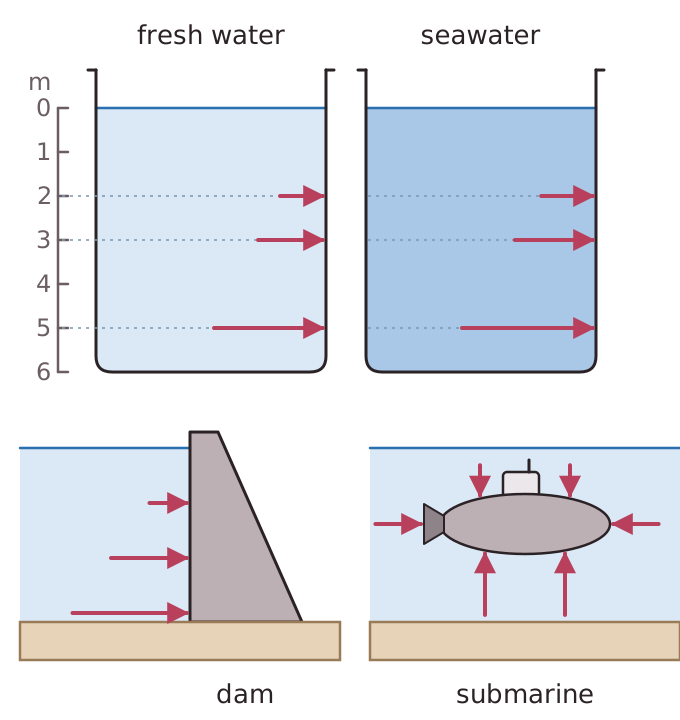
A liquid is made of particles that are close together and constantly moving. They collide with the walls of a container and with any object in the liquid, and these collisions produce a force on every part of the surface. The force on each square metre of surface is the pressure. At any point in a liquid the pressure acts equally in all directions.
The pressure in a liquid increases as the depth increases. A point deep down has more liquid above it, and the weight of that liquid presses down on the liquid below. The greater the weight above a point, the greater the pressure there. At twice the depth the pressure is twice as great, because there is twice as much liquid above.
The pressure also depends on the density of the liquid. A denser liquid has more mass in every cubic metre, so a column of it has a greater weight. At the same depth, the pressure in a denser liquid is greater than the pressure in a less dense one. The shape of the container makes no difference. Only the depth and the density matter.