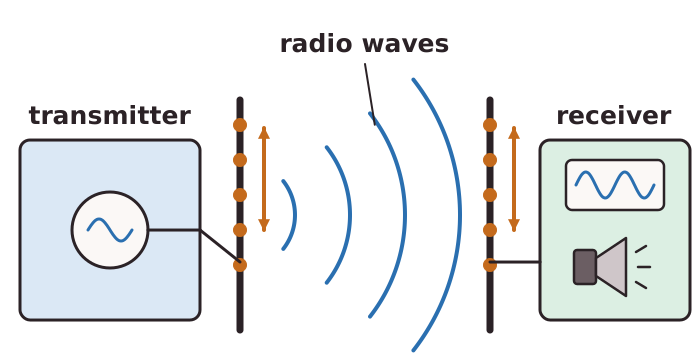
Radio waves can be produced by oscillations in an electrical circuit. In a radio transmitter, an alternating current flows in the circuit and in the transmitting aerial. The electrons in the aerial oscillate backwards and forwards, and this produces radio waves. The radio waves have the same frequency as the alternating current. A circuit oscillating at 90 MHz produces radio waves with a frequency of 90 MHz.
The process also works in reverse. When radio waves reach a receiving aerial, they are absorbed, and the energy they carry makes electrons in the metal oscillate. This induces an alternating current in the receiver circuit, with the same frequency as the radio waves. The circuit can then turn this signal into sound.
Different radio stations use different frequencies, so a receiver can pick out one station from the others.