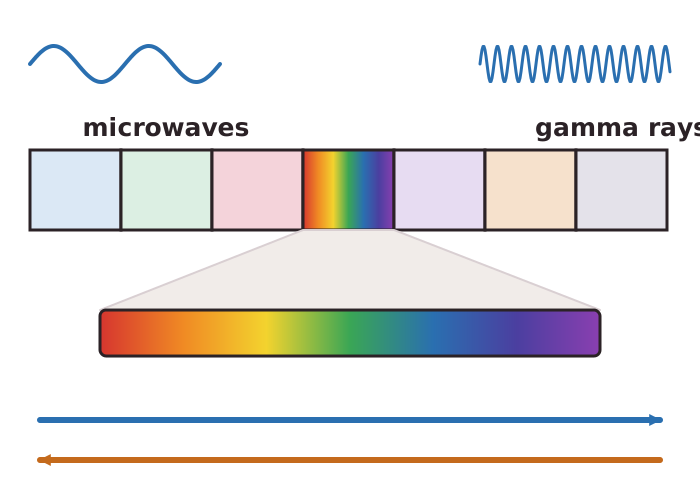
The electromagnetic spectrum is very wide, but our eyes can only detect a very small part of it. This part is visible light, from red to violet, with wavelengths of roughly 400 to 700 nanometres.
Light-sensitive cells in the retina absorb visible light and send signals to the brain. These cells do not respond to the other groups, so we cannot see radio waves, microwaves, infrared, ultraviolet, X-rays or gamma rays.
Other detectors are needed for the rest of the spectrum. For example, a phone camera can pick up the infrared from a remote control and show it on the screen, even though your eye sees nothing. Just because we cannot see a wave does not mean it is not there.