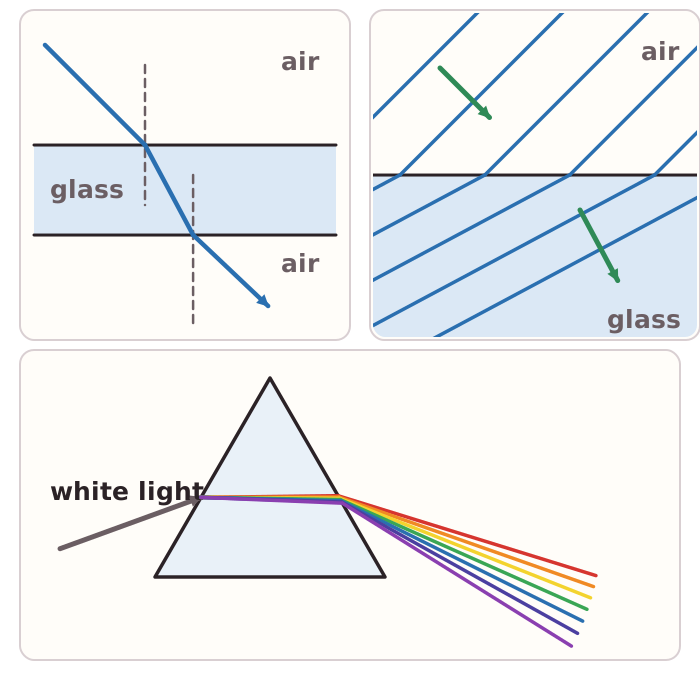
In a vacuum all electromagnetic waves travel at the same speed, 300 000 000 m/s. In other substances they travel more slowly. In glass, for example, light travels at about 200 000 000 m/s. When a wave moves from one substance into another, its speed changes. The frequency is set by the source and stays the same, so when the speed decreases the wavelength also decreases, because speed = frequency × wavelength.
If a wave meets a boundary at an angle, one side of the wave front slows down before the other. This makes the wave change direction, and the effect is called refraction. When light goes from air into glass it slows down and bends towards the normal. When it leaves the glass it speeds up and bends away from the normal.
Different colours of light slow down by different amounts. In a glass prism violet light slows down the most, so it bends the most, while red light bends less. This is why a prism splits white light into a spectrum of colours.