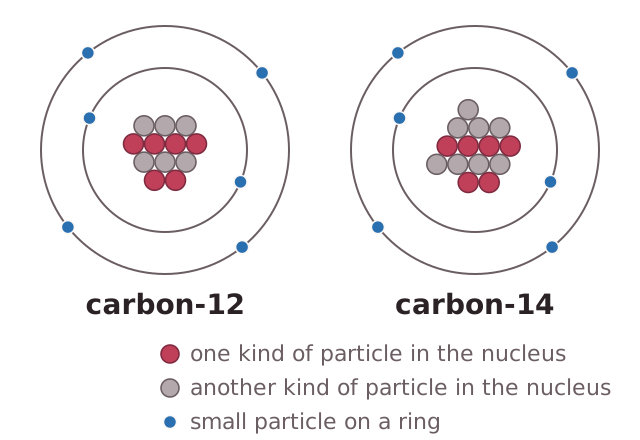
All atoms of one element have the same number of protons, which is its atomic number. They can, however, have different numbers of neutrons. Atoms of the same element with different numbers of neutrons are called isotopes.
Carbon is a good example. Carbon-12 has 6 protons and 6 neutrons. Carbon-14 has 6 protons and 8 neutrons. Both are carbon because both have 6 protons. Each neutron has a relative mass of 1, so extra neutrons make the nucleus heavier. Carbon-14 has a larger mass than carbon-12, and the number in the name (the mass number) shows this. The mass number is the total number of protons and neutrons in the nucleus.
A neutral atom has the same number of electrons as protons, so isotopes of one element have the same number of electrons. The chemical properties of an element depend on its electrons, so isotopes of one element react in the same way. Some isotopes have unstable nuclei, and these are radioactive.