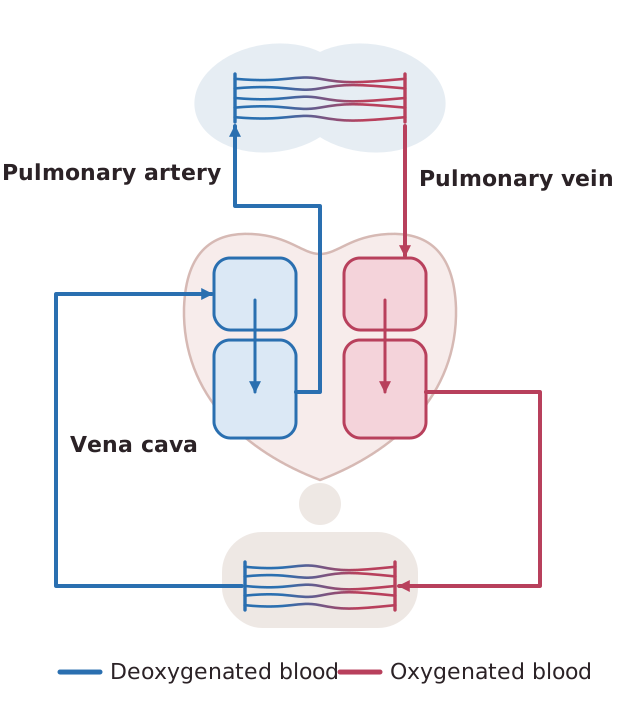
The human circulatory system is a double circulatory system. Blood passes through the heart twice in one complete circuit of the body. The right side of the heart pumps deoxygenated blood to the lungs, and the left side pumps oxygenated blood to the rest of the body.
The two circuits are linked to the gaseous exchange system. In the lungs, blood flows through capillaries wrapped around the alveoli. Oxygen diffuses from the air in the alveoli into the blood and carbon dioxide diffuses the other way. The oxygenated blood then returns to the heart.
A double system is needed because blood loses pressure as it squeezes through the tiny capillaries of the lungs. Returning it to the heart lets the left ventricle give it a second push at high pressure. This delivers oxygen and glucose quickly to the body, which suits mammals because they are active and have a high demand for energy.
The main vessels are the vena cava, which brings blood from the body to the right atrium, the pulmonary artery, which takes blood from the right ventricle to the lungs, the pulmonary vein, which brings blood from the lungs to the left atrium, and the aorta, which takes blood from the left ventricle to the body. Arteries carry blood away from the heart and branch into smaller vessels ending in capillaries, where exchange happens. Capillaries join up to form veins, which return blood to the heart.