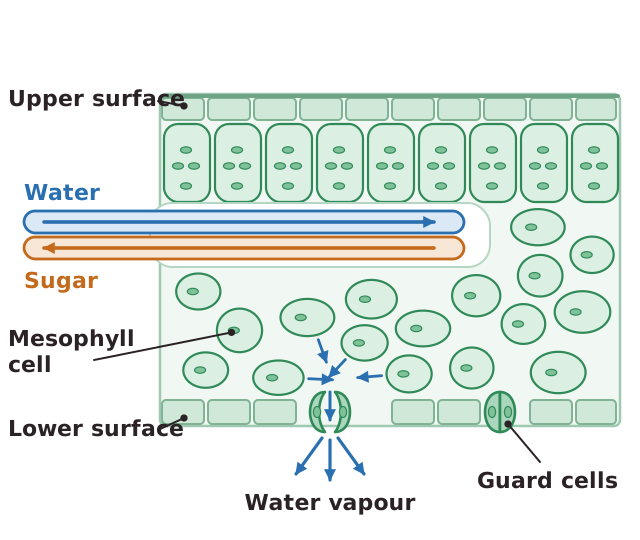
Transpiration is the loss of water vapour from the leaves of a plant. Water evaporates from the surface of the mesophyll cells inside the leaf. The water vapour then diffuses out through tiny pores called stomata (one pore is a stoma). Moving water in the xylem replaces what is lost, so a stream of water is pulled up from the roots.
Each stoma is surrounded by two guard cells. When water enters the guard cells they become turgid and bend apart, which opens the stoma. When they lose water they become flaccid and the stoma closes. Open stomata let carbon dioxide in for photosynthesis, but they also let water vapour out. Most stomata are on the lower surface of a leaf, where it is cooler, so less water is lost.
To find the stomatal density, make an impression of the leaf with clear nail varnish, peel it off and count the stomata in one field of view under a light microscope. For example, 12 stomata on an upper surface and 48 on a lower surface means the lower surface has 4 times as many stomata.
Translocation is different. It is the movement of sucrose, made by photosynthesis in the leaves, through the phloem to the parts of the plant that need it, such as growing tips and storage organs.