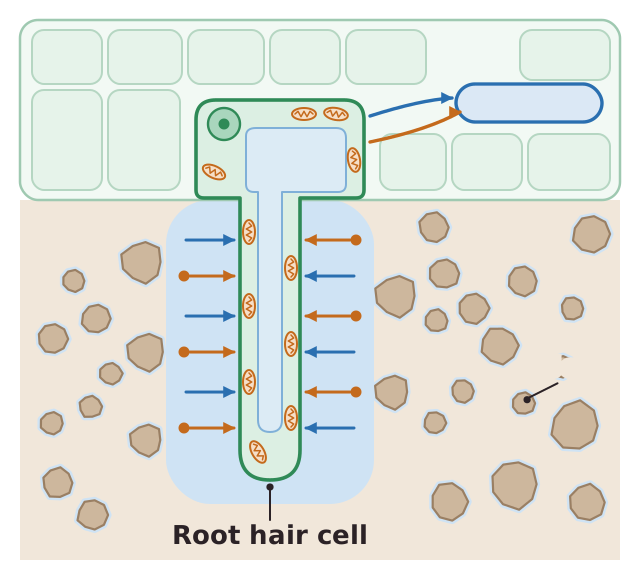
Plants take in water and mineral ions from the soil through root hair cells. These cells have a long, thin extension that sticks out into the soil. This gives a very large surface area for absorption, and the thin cell wall gives a short distance for water and ions to cross.
Water enters a root hair cell by osmosis. The soil water has a higher concentration of water than the cytoplasm of the root hair cell, so water moves into the cell down the concentration gradient across the partially permeable membrane. The water then passes across the root to the xylem, which carries it up the plant.
Mineral ions such as nitrate are usually at a lower concentration in the soil than inside the root hair cell. They cannot move in by diffusion, so they are taken up by active transport. This moves ions against the concentration gradient and needs energy from respiration. Root hair cells have many mitochondria to release this energy.