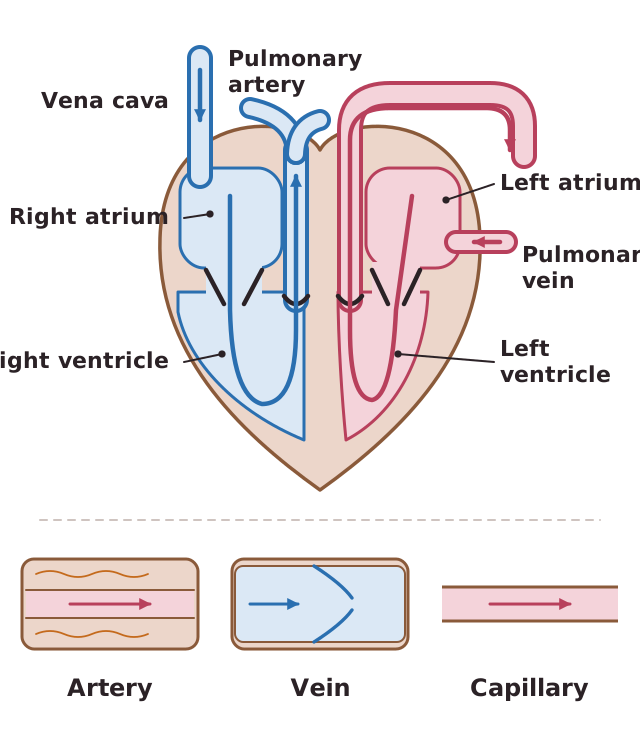
The heart is a muscular pump made mostly of cardiac muscle, which contracts without tiring. It has four chambers. The two atria receive blood from the veins and the two ventricles pump blood out into the arteries. The wall of the left ventricle is much thicker than that of the right ventricle because it pumps blood at high pressure around the whole body, while the right ventricle only pumps blood to the lungs. The cardiac muscle gets its own oxygen from the coronary arteries.
Valves keep blood moving in one direction. The atrioventricular valves lie between the atria and ventricles, and the semilunar valves lie at the start of the aorta and the pulmonary artery. Blood enters the right atrium from the vena cava and the left atrium from the pulmonary vein. It leaves the right ventricle in the pulmonary artery and the left ventricle in the aorta.
The three types of blood vessel are adapted to their jobs. Arteries carry blood away from the heart at high pressure, so they have thick walls containing muscle and elastic fibres and a narrow lumen. Veins carry blood back to the heart at low pressure, so they have thinner walls and a wide lumen, and valves stop the blood flowing backwards. Capillaries have walls only one cell thick and a very narrow lumen, giving a short diffusion distance between the blood and the cells.