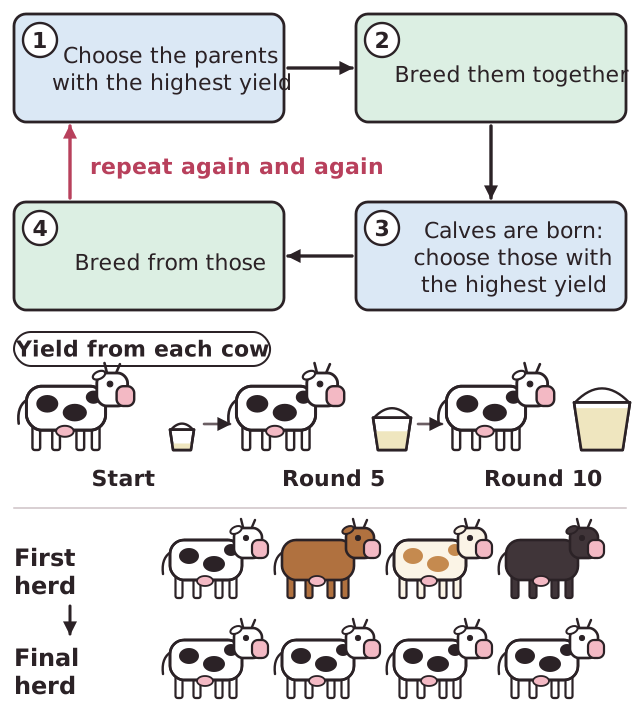
Selective breeding is when humans choose which organisms breed, so that useful characteristics are passed on. The farmer picks parents with the best characteristics, breeds them together, then selects the best offspring to breed from. This is repeated for many generations.
In food plants, breeders select characteristics such as high yield, disease resistance, larger fruit and tolerance of drought. In domesticated animals, they select for more meat, more milk or more eggs. Over time, the same land and the same number of animals produce more food, which helps to feed a growing population.
There are drawbacks. Each generation comes from only a few parents, so the population has less genetic variation. If a new disease appears, every organism may be equally at risk and many could die. Breeding closely related animals together is called inbreeding, and it can pass on harmful genetic problems. Long-term field trials, such as the Broadbalk wheat experiment at Rothamsted, show how crop yields change over many years under different treatments.