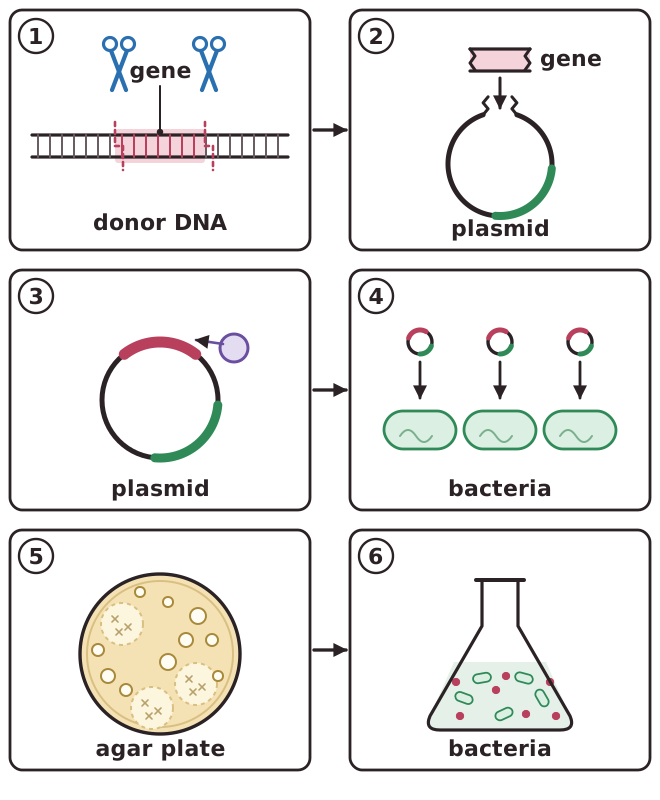
Genetic engineering follows a series of steps. First, the gene for the desired characteristic is cut out of the donor DNA using a restriction enzyme. Each restriction enzyme cuts DNA at a specific base sequence, and it leaves short single-stranded ends called sticky ends.
The gene must be carried into the host cell by a vector, often a plasmid. The same restriction enzyme cuts open the plasmid, so that its sticky ends match the sticky ends of the gene. The enzyme DNA ligase then joins the gene into the plasmid. This forms a recombinant plasmid.
The recombinant plasmids are put into host bacteria. Only some bacteria take up a plasmid, so the plasmid also carries an antibiotic resistance marker gene. The bacteria are spread on agar containing the antibiotic, and only bacteria that have taken up the plasmid survive. These bacteria are selected and grown, and they copy the gene and make its protein as they divide.