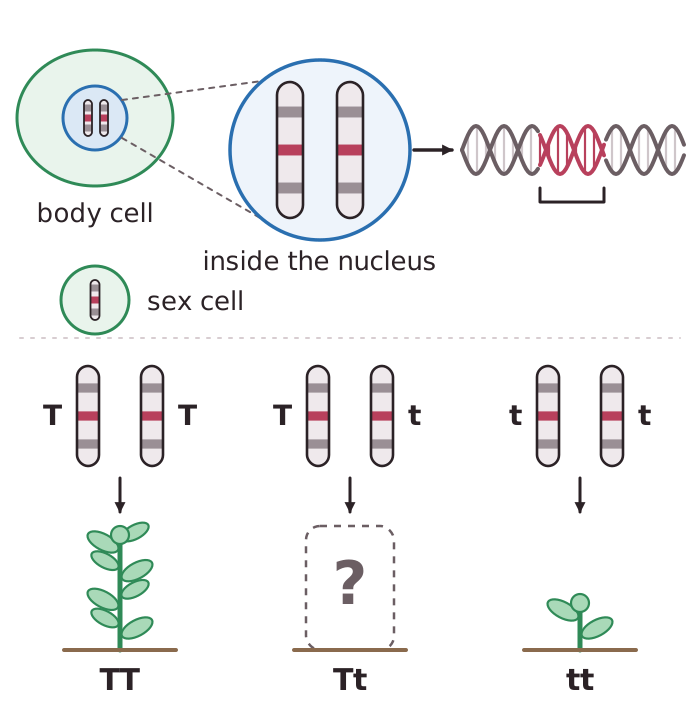
A gamete is a sex cell: a sperm cell in males and an egg cell in females. A gamete carries half the genetic information of a normal body cell. A chromosome is a long thread of DNA found in the nucleus. A gene is a short section of a chromosome that codes for a protein, and so controls a characteristic. Different forms of the same gene are called alleles, or variants. For example, a gene for flower colour may have one allele for purple petals and another for white petals.
Body cells carry two alleles of each gene, one from each parent. A dominant allele is always expressed, even when only one copy is present. A recessive allele is only expressed when there is no dominant allele, so two copies are needed. Dominant alleles are written as capital letters (T) and recessive alleles as lower case letters (t).
If the two alleles of a gene are the same, the organism is homozygous for that gene, as in TT or tt. If the alleles are different, it is heterozygous, as in Tt. The genotype is the combination of alleles an organism has. The phenotype is the characteristic you can see or measure, such as tall stems or brown eyes.