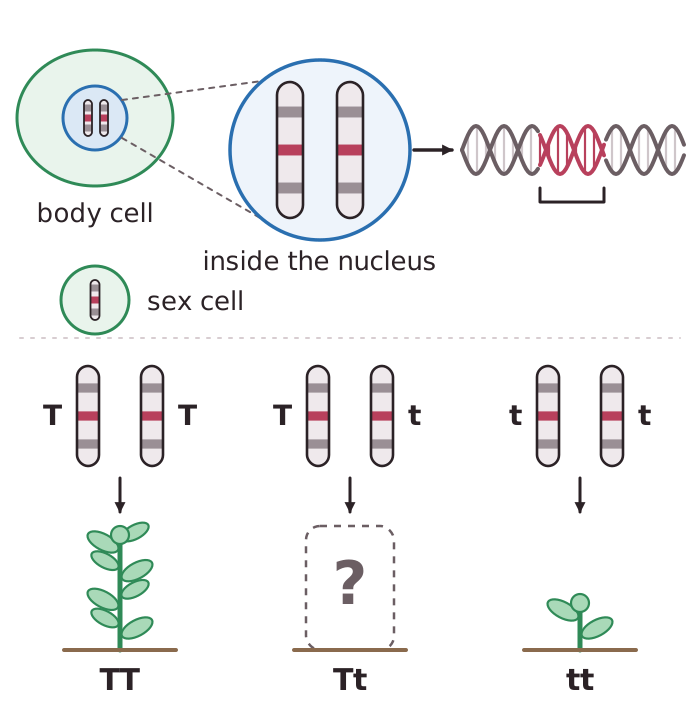
Some features are controlled by just one gene. A gene can have different versions called alleles. In a body cell you have two copies of each gene, so you have two alleles, one inherited from each parent. We use letters to show them. A capital letter stands for a dominant allele and a small letter stands for a recessive allele.
A dominant allele shows in the phenotype even when only one copy is present. A recessive allele only shows when there is no dominant allele, so two copies are needed. For example, if the allele for tall pea plants (T) is dominant to the allele for short plants (t), then TT and Tt plants are tall and only tt plants are short.
An organism with two identical alleles is homozygous, for example TT (homozygous dominant) or tt (homozygous recessive). An organism with two different alleles, such as Tt, is heterozygous. The genotype is the pair of alleles, and the phenotype is the feature you can see.
A heterozygous person is a carrier of the recessive allele. They do not show the recessive feature, but they can pass the allele on to their children.