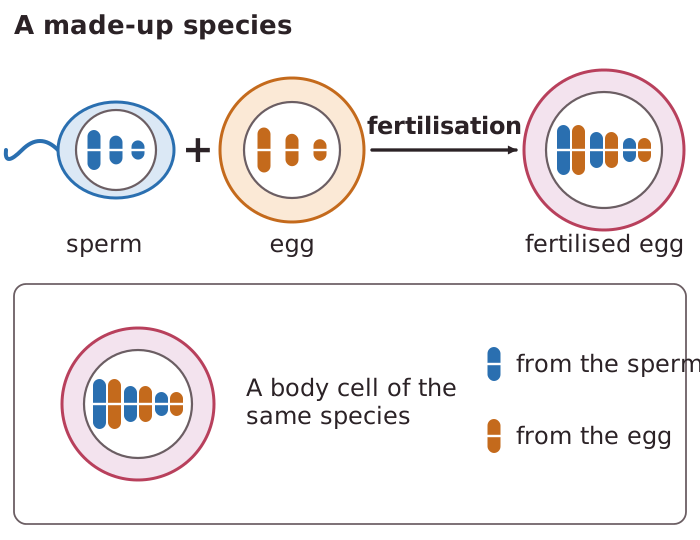
A cell that contains a single set of chromosomes is called haploid. It has just one copy of each chromosome. A cell that contains two sets of chromosomes is called diploid. In a diploid cell the chromosomes are in pairs, with one chromosome of each pair from each parent.
Human body cells are diploid. They have 46 chromosomes, arranged as 23 pairs. Human gametes are haploid, with 23 chromosomes, one from each pair. A species with 8 chromosomes in its body cells has gametes with 4 chromosomes.
When a sperm cell fertilises an egg cell, the two haploid nuclei join. The zygote formed has 23 + 23 = 46 chromosomes, so the diploid number is restored. If gametes were diploid, the chromosome number would double in every generation.