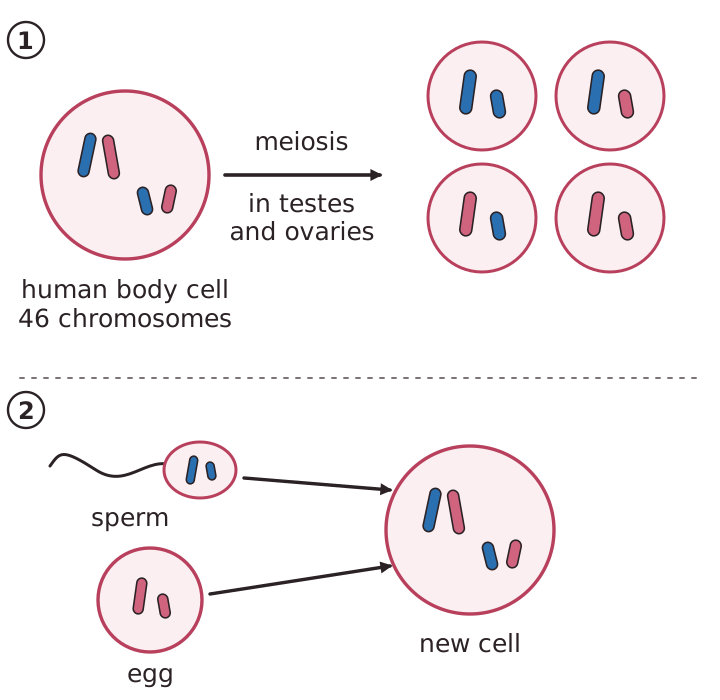
Meiosis is the type of cell division that makes gametes. It happens in the reproductive organs, which are the ovaries and the testes in humans. A diploid cell divides to form gametes that are haploid, with half the chromosomes of a body cell. So meiosis halves the chromosome number. A human cell with 46 chromosomes forms gametes with 23 chromosomes.
Halving the number is important. When a haploid sperm fuses with a haploid egg at fertilisation, the zygote is diploid again. This maintains the diploid number from one generation to the next. The zygote then divides to build a new organism.
Meiosis is also a source of genetic variation. Each gamete gets a different mixture of the chromosomes and alleles. A parent with the genotype Aa makes gametes that carry either A or a, while a homozygous parent with the genotype AA makes gametes that all carry A. Which gametes meet at fertilisation is also random, which adds more variation.