Fossils are the remains or traces of organisms from many years ago, found preserved in rocks. Hard parts such as bones and shells may be replaced by minerals, and footprints can be preserved in mud that hardens. Fossils in older rock layers are usually deeper, so scientists can put them in order and see how organisms have changed over time. This is evidence for evolution. The fossil record is incomplete because many early organisms were soft bodied and decayed, and many fossils have been destroyed or not yet found.
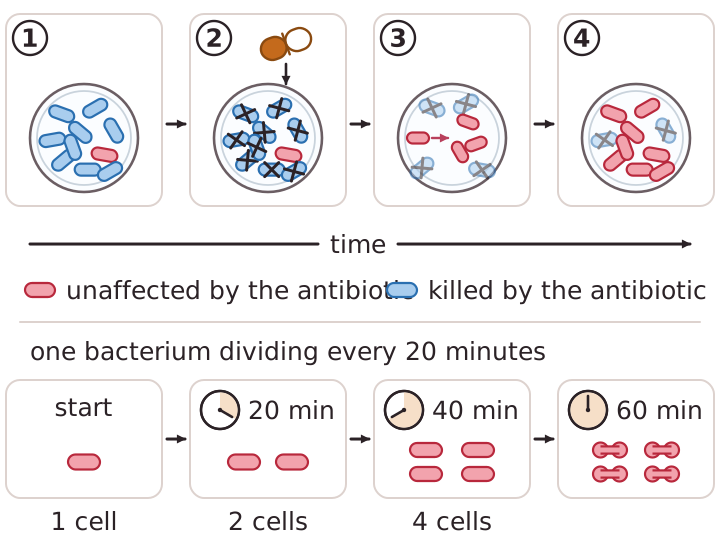
Antibiotic resistance in bacteria is evidence for evolution that we can see happening. A mutation in a bacterium can give a new allele that makes it resistant to an antibiotic. When the antibiotic is used, the non-resistant bacteria are killed but the resistant ones survive and reproduce. They pass on the resistance allele, so the resistant population grows. This is natural selection, and the resistant bacteria are naturally selected.
Bacteria reproduce very quickly. If a bacterium divides every 20 minutes, one bacterium becomes 8 after one hour, which is three divisions. This is why resistance can spread fast. MRSA is an example of a resistant strain. To slow the spread, doctors avoid prescribing antibiotics when they are not needed, and patients should complete their courses.