Classification means sorting living things into groups. An artificial classification system groups organisms using a few features chosen by people, such as being able to fly. This puts bats, birds and insects together, even though they are not closely related. It is easy to use but it does not show how organisms are related.
A natural classification system groups organisms by many shared features, so that organisms in the same group are closely related. Linnaeus developed the system of kingdom, phylum, class, order, family, genus and species, which is based on shared observable features. As microscopes and biochemical methods improved, scientists found more features to compare, and some groupings were changed.
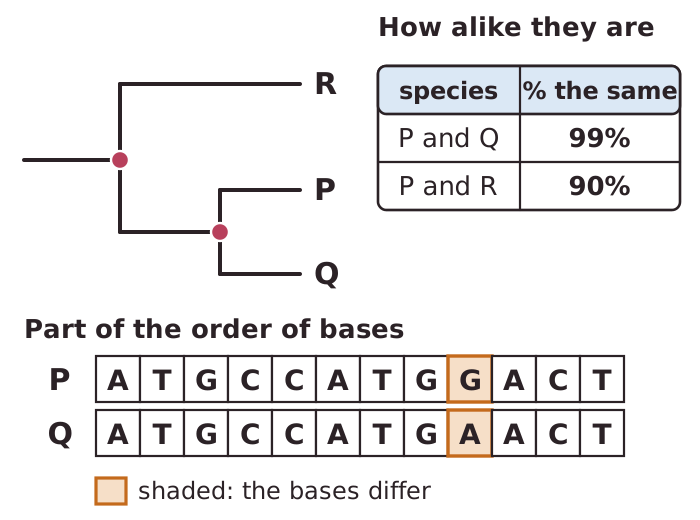
Today molecular phylogenetics compares the order of bases in the DNA of different species, found by DNA sequencing. The more similar the DNA sequences, the more closely related the species are, because they shared a common ancestor more recently. These results are used to build evolutionary trees. DNA evidence has shown that some groupings based only on appearance were wrong, and it led to the idea of three domains: bacteria, archaea and eukaryotes.