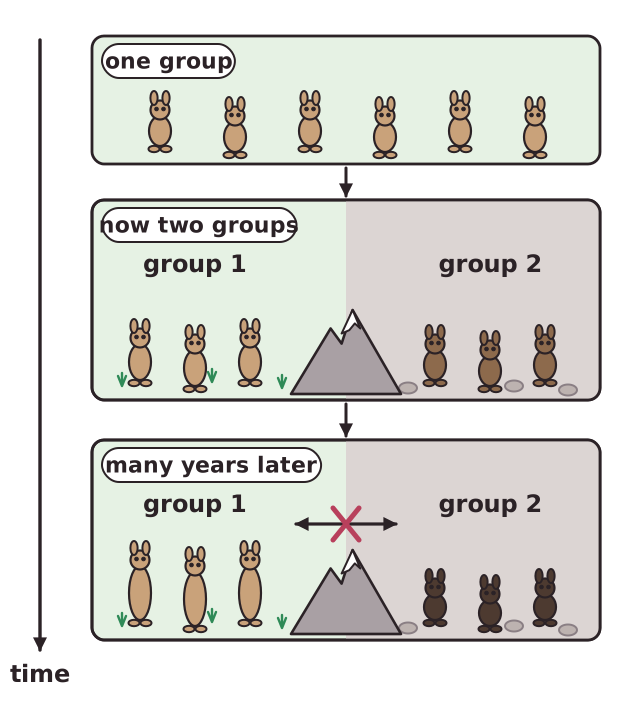
Evolution is a change in the inherited characteristics of a population over time, through the process of natural selection. It happens to populations, not to single individuals. An individual keeps the alleles it was born with, but the proportion of alleles in a population changes from one generation to the next.
Evolution can lead to the formation of a new species. Imagine two populations of one species that become separated, for example by a mountain range or a sea. The environments differ, so natural selection favours different phenotypes in each one. Different mutations also arise in each population.
Over many generations the two populations become so different that they can no longer interbreed to produce fertile offspring. At that point they are two different species. Evolution by natural selection explains how all living things are related and how so many different species exist. If the environment changes and no individuals are suited to it, a species may become extinct.