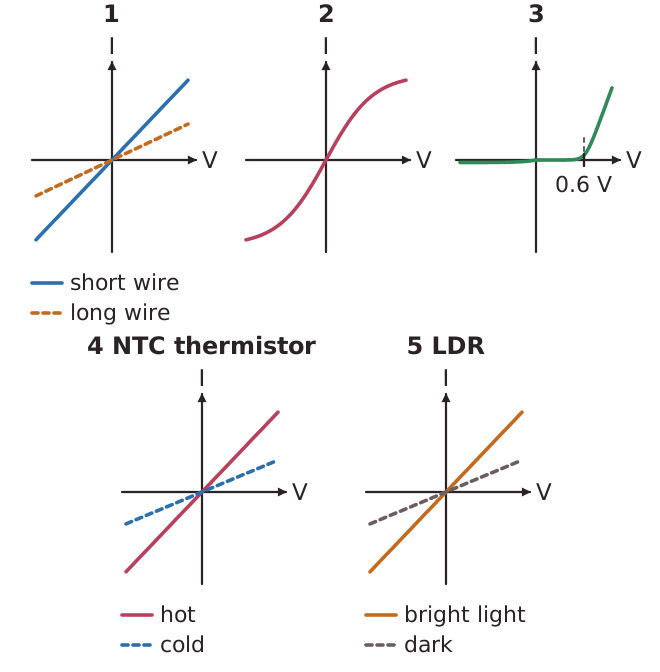
The shape of an I-V graph tells you how a component works. A wire or fixed resistor gives a straight line. A longer wire has a greater resistance, so its line is shallower than the line for a short wire of the same material and thickness.
A filament lamp gives a curve that flattens as the potential difference rises. More current makes the filament hotter, the ions in the metal vibrate more, and the electrons collide with them more often. The resistance increases, so the line flattens.
A diode only lets current flow in the forward direction. In the reverse direction the current is almost zero because the resistance is very high. In the forward direction it needs about 0.6 V before the current rises sharply.
The resistance of an NTC thermistor decreases as its temperature increases. The resistance of an LDR decreases as the light intensity increases.