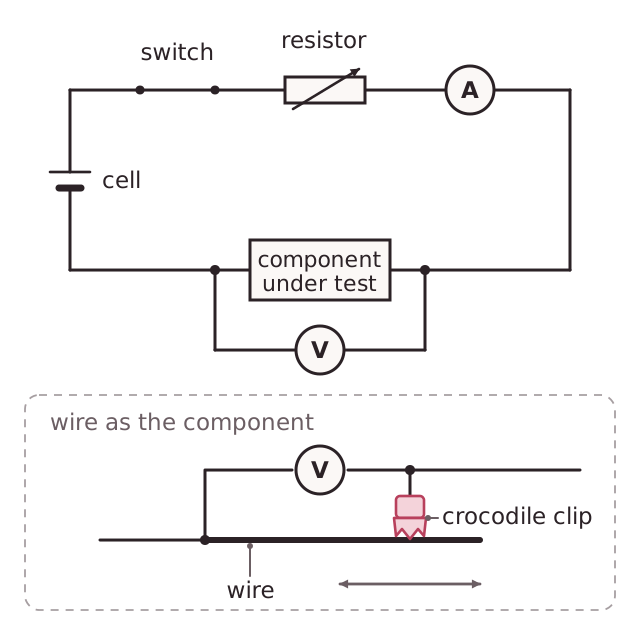
To explore how a component behaves, build a test circuit. Connect the component in series with an ammeter, a variable resistor and the power supply. Connect a voltmeter in parallel across the component only. Changing the variable resistor changes the current, so you can record many pairs of p.d. and current readings.
For a wire of varying length, move a crocodile clip along it. Calculate the resistance by dividing the potential difference by the current. A longer wire gives a greater resistance, so for the same p.d. the current is smaller. Resistance is directly proportional to the length. Use low currents and switch off between readings so the wire does not heat up, because heating changes the resistance.
For a filament lamp, take readings as the current increases and watch the resistance rise. For a diode, connect it both ways round, because current passes in only one direction. For an NTC thermistor, change its temperature in a water bath and measure it with a thermometer. For an LDR, change the light intensity falling on it.