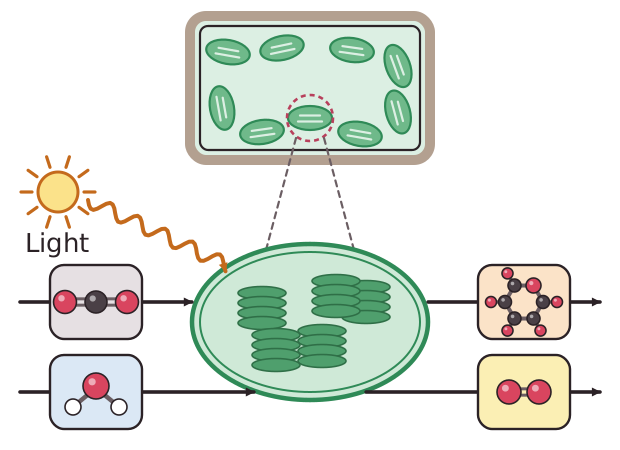
In photosynthesis, the reactants are carbon dioxide and water. The products are glucose and oxygen. The word equation is: carbon dioxide + water → glucose + oxygen, and the reaction needs light energy.
It happens in two stages. In stage one, the green pigment chlorophyll absorbs light energy. This energy is used to split water into hydrogen and oxygen, and the oxygen is released. In stage two, the hydrogen is combined with carbon dioxide to make glucose.
The reaction takes place in the chloroplasts, which are found in the cells of the green parts of a plant, such as leaves. Chloroplasts contain chlorophyll. Much of the glucose is used in respiration, and some is turned into starch for storage.