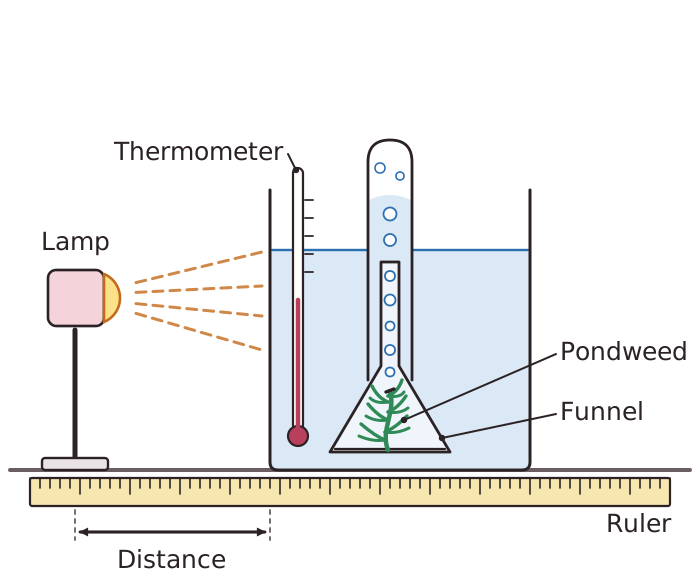
Several experiments show what photosynthesis needs and what it makes. In Priestley's experiment, a candle burning in a sealed jar goes out as the oxygen is used up. If a plant is in the jar, the candle can burn for longer, because the plant releases oxygen. In the Ingenhousz experiment, an underwater plant such as Cabomba is placed in light and bubbles of oxygen are released. Counting the bubbles, or collecting the gas, gives a measure of the rate of photosynthesis. If bubbles increased in number, the rate has gone up.
To show that light is needed, a plant or leaf is kept in the dark, for example by covering it with foil. It cannot photosynthesise, so it makes no starch. We test a leaf for starch like this: boil it in water to kill it, heat it in ethanol to remove the chlorophyll, rinse it, then add iodine solution. Iodine turns blue-black if starch is present and stays orange-brown if it is not.
A covered leaf stays orange-brown, but an uncovered leaf on the same plant turns blue-black. Because everything else is the same, the difference is due to light. Always control other variables such as temperature and water supply.