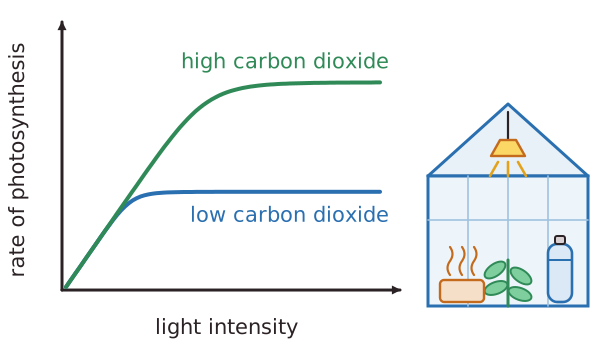
Three factors affect the rate of photosynthesis: light intensity, carbon dioxide concentration and temperature. The rate can be measured as the volume of oxygen released divided by the time taken.
As light intensity increases, the rate increases at first, because more light energy is absorbed. Light intensity falls as the distance from a lamp increases. It is proportional to 1 divided by the distance squared, which is the inverse square law. Doubling the distance makes the light intensity four times smaller.
Carbon dioxide is a reactant, so a higher concentration increases the rate until the line levels off. Temperature also increases the rate, because particles move faster and react more often. Photosynthesis is controlled by enzymes, so above the optimum temperature the enzymes start to be denatured and the rate falls.