Ammonia, NH3, is made from nitrogen and hydrogen. The nitrogen is extracted from the air, which is about four-fifths nitrogen. The hydrogen is obtained from natural gas, which is mainly methane.
The reaction is reversible: N2 + 3H2 ⇌ 2NH3. One molecule of nitrogen reacts with three molecules of hydrogen to make two molecules of ammonia, and ammonia can also break down again into nitrogen and hydrogen.
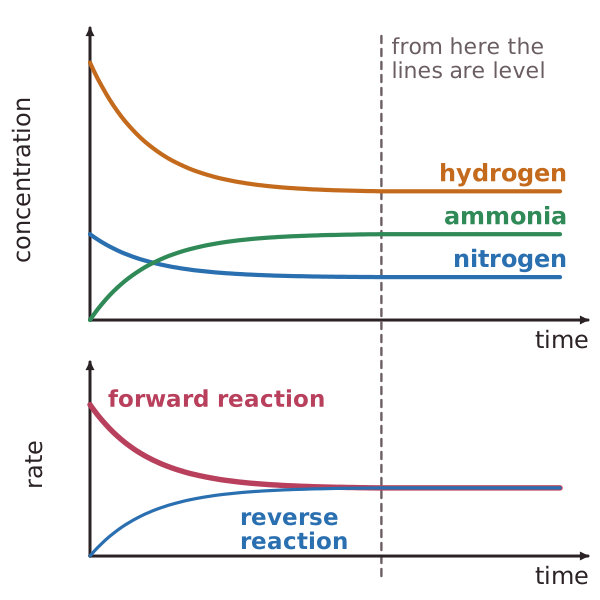
If the reaction is carried out in a closed container it reaches dynamic equilibrium. At this point the forward and reverse reactions are still happening, and they happen at the same rate. Because the rates are equal, the concentrations of nitrogen, hydrogen and ammonia stay constant.
Dynamic equilibrium does not mean the reactions have stopped, and it does not mean that the concentrations are equal. It means the amounts stay the same because ammonia is made as fast as it is broken down. Not all of the nitrogen and hydrogen ever turns into ammonia.