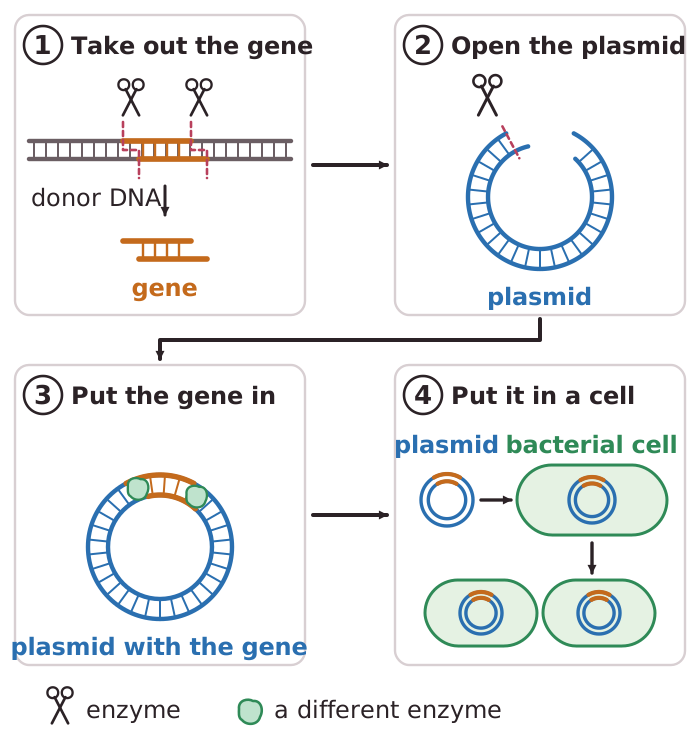
Genetic engineering follows a series of stages. First, the gene for the useful characteristic is found in the DNA of the donor organism and cut out using restriction enzymes. Each restriction enzyme cuts DNA at one particular base sequence. Many of them make a staggered cut that leaves short single strands of unpaired bases, called sticky ends.
Next, a vector is needed to carry the gene into the new cell. A vector is usually a plasmid, which is a small ring of bacterial DNA, or a virus. The same restriction enzyme is used to cut open the plasmid, so its sticky ends are complementary to the sticky ends on the gene and the two pair up.
The enzyme ligase then joins the gene into the plasmid by sealing the gaps in the DNA, which gives a plasmid with a new gene. Finally, the vector carries the gene into the target cells, such as bacterial cells. As the cells divide they copy the gene, and they make the protein it codes for.