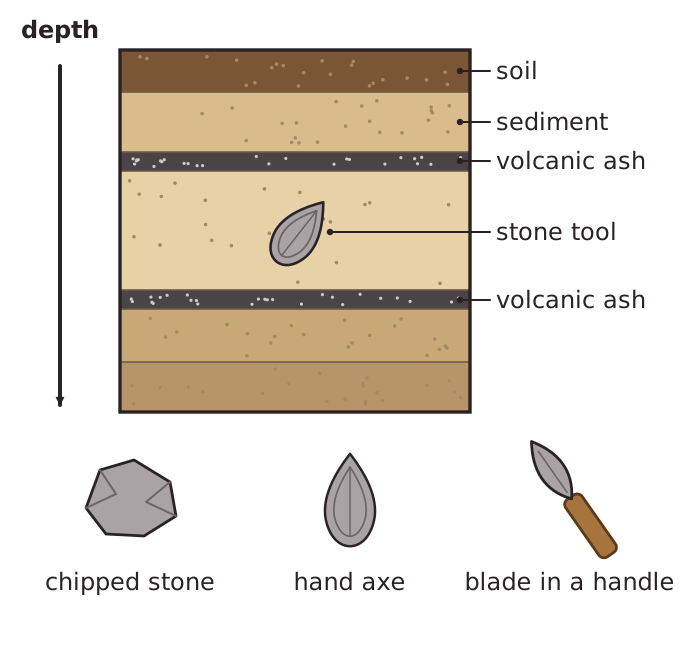
Early humans made stone tools, and these give evidence of how their skills developed. The earliest tools, from more than 2 million years ago, were simple. A stone was chipped a few times to make a sharp edge for cutting meat or scraping bones.
Over time the tools became more complex. Hand axes made by Homo erectus about 1.7 million years ago were shaped on both sides to a symmetrical, sharper edge. Later still, people made thin blades and fitted them into handles of wood or bone. Making better tools needs planning and skill, so early humans became more skilled, which fits with the increase in brain size seen in fossils.
Tools can be dated from their environment. Layers of sediment build up over time, so deeper layers are older, and a tool is about the same age as the layer it is found in. Layers of volcanic ash above and below a tool can be dated, which gives the limits on its age. For example, a tool found between ash layers dated at 1.8 million and 1.6 million years old is between 1.6 and 1.8 million years old.