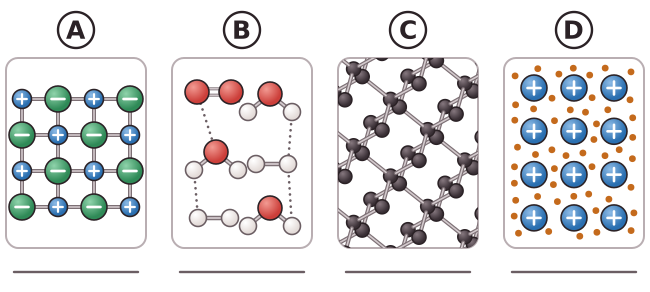
Elements and compounds can be sorted into four types by their structure and bonding. The type explains the physical properties, including melting point, boiling point, solubility in water and electrical conductivity.
- Ionic: a lattice of oppositely charged ions. High melting and boiling points, and many dissolve in water. They do not conduct as solids, but conduct when molten or in solution because the ions are free to move.
- Simple molecular (covalent): small molecules with weak intermolecular forces between them. Low melting and boiling points, and most do not dissolve in water. They do not conduct electricity.
- Giant covalent: a huge network of atoms joined by strong covalent bonds, as in diamond. Very high melting points, insoluble in water, and they do not conduct (graphite is an exception).
- Metallic: positive ions in a sea of delocalised electrons. High melting points, insoluble in water, and they conduct as solids because the delocalised electrons can move.
Melting a substance means overcoming the forces holding its particles together, so strong forces between particles give a high melting point.